

Best For Everyday Use
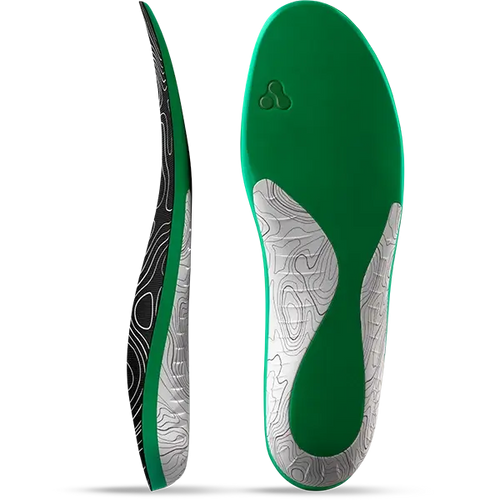
Protalus T-100 Landing Gear
The surface your body lands on. Thinner fit. Patented alignment in motion.
What they’re landing on is.
The ground is flat. Your body isn’t built for that. The Landing Gear from Protalus is the missing surface — the one that turns every heel strike into comfort instead of compensation.
Over 2,000,000 satisfied Customers
The surface your body lands on. Thinner fit. Patented alignment in motion.


Extra Cushion for Lower-Volume Shoes


Heavy-Duty Support


High-Volume Heavy-Duty Support
Your body was built for uneven terrain. Then the world went flat. Protalus is the landing surface that sidewalks, tile, and concrete never gave you.

Varied. Uneven. The foot knew what to do.

Flat on the left. Flat on the right. Your heel has nothing to work with.

The patented surface that puts the missing angle back under your heel.
Flat floors force your joints to absorb every step. Other insoles copy the shape of a foot at rest. Protalus patented the geometry of a foot in motion. A Landing Gear for your feet that affects your whole body.


The best place to start. Slips into almost any shoe you already own, and you'll feel the difference in your first few steps.

Everything the T-100 does, plus
anti-fatigue cushioning for hard floors, long shifts, or days when the ground just won't let up.

Maximum alignment correction, full-length support. Built for boots, work, hiking, or safety, with the depth to hold it right.
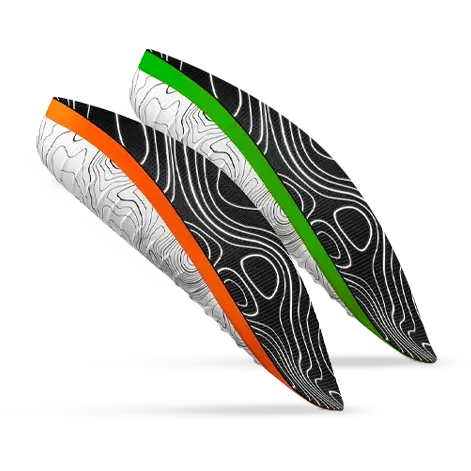
T-75 and M-75 sit on top of a fixed insole. H-75 is built for heels. Best for: dress shoes, tight fits, non-removable liners
Every surface punishes differently. Protalus is landing gear engineered for them all.
12-hour shifts on hospital tile. The floor never changes. Your landing gear handles the biomechanics so you can focus on the patient.
10+ miles a day on concrete. One of the world’s largest warehouse operators deployed Protalus for hundreds of thousands of workers. Now it’s your landing gear too.
Standing still is harder on your body than walking. Landing gear keeps the ankle loaded correctly even when stationary — reducing the venous pressure behind heavy, aching legs.
Safety boots protect your toes. They weren’t designed for 8 hours on concrete slab. Protalus landing gear fixes what the boot can’t — the geometry of your gait, every step.
The same geometry that protects warehouse workers makes runners efficient. When your drive shaft is on axis, energy recycles instead of dissipating.
Balance degradation is partly mechanical. Landing gear restores accurate proprioceptive feedback through the foot — improving balance on any surface, any terrain.
The number tells you the length of the insole. The T-100 and M-100 are full-length landing gear that extends to the end of your foot. The T-75 and M-75 are ¾-length — they stop at the ball of the foot but deliver identical geometry.
Absolutely. Protalus insoles are designed to transfer shoe to shoe. Many customers keep one pair and swap it into whatever they’re wearing that day.
Protalus landing gear guides your foot onto the correct biomechanical axis. Customers report reduced foot, knee, and lower-back discomfort, improved balance, and less fatigue during long days on their feet.
Protalus strives to process orders as quickly as possible. Once you place your order, it will be shipped out the following business day. Any delay in the shipping process will be posted to our website. Typically, flat rate shipping is 5-7 business days, and priority shipping is 3-5 business days. All orders come with tracking numbers and are shipped via USPS from Portland, Oregon.
We offer a 90-Day Insole Guarantee on all insoles ordered through Protalus.com, excluding Subscription orders. If you would like to return your Protalus insoles, please visit our Returns Page. If you prefer to ship them yourself please send them to '20750 SW 115th Ave Suite 190, Tualatin, OR 97062' with your order number or packing invoice. If you choose not to use our prepaid return label, we do not refund return shipping cost. After we have received your insoles, we will refund the original form of payment excluding any original shipping cost.

Expert perspective
“Comfort is a natural byproduct of alignment, not simply cushion.”
Alignment and appropriate control of that alignment when completing a task is the key to efficient mechanical performance. In the same way this functional alignment optimization concept is true for an automobile to drive in a straight line with the least amount of energy “cost” to the engine and the least amount of “fatigue” wear to the tire treads, the same concept applies for optimized biomechanical alignment of the human body with upright activity.
This functional, anatomic alignment is something that occurs through the interaction of our skeletal structure and the muscle-tendon units that provide dynamic support of this alignment with both mobile and stationary activity. It is for this reason that musculoskeletal support interventions aimed at achieving and maintaining optimized alignment have been a mainstay of prevention efforts to minimize musculoskeletal related overuse and fatigue in the workplace.
Unfortunately, current offerings as it relates to shoewear, inserts, and other footwear-related interventions/prevention efforts have failed to consistently and effectively alleviate this burden of disease in the workplace, particularly for the upright worker.
Specific to biomechanics of the human body, fatigue is a consequence of deviation from optimal mechanical alignment during various activities. While there is a natural amount of deviation from optimal alignment and resultant muscle fatigue that occurs during natural movements, it is excess deviation from this optimized alignment and the body’s continual attempt to restore and correct that alignment that potentiates early, excess fatigue and overuse stress on the body.
As a result, frequent interventions in preventive healthcare space have aimed at optimizing alignment both through postural exercises and strength training, external bracing/supports, and other modalities to help “control” and optimize alignment while still facilitating and importantly not limiting normal function.
As it relates specifically to interventions for the foot, a fallacy of modern day shoewear and inserts is that theoretical “control” comes from midfoot “arch support” rather than at the hindfoot during heel strike and the early stance phase as force moves from the hindfoot (heel) to the midfoot (arch). The unfortunate reality is that when this external “support” is initiated only during this later phase of walking/stance, it is less efficient AND less effective at true alignment control. Furthermore, it is much more difficult to accomplish in this manner without sacrificing perceived comfort in many individuals. Interestingly, some of the most successful clinical study interventions related to limb alignment control and/or correction have historically focused on modalities such as heel wedges providing corrective forces to the heel and posture of the hindfoot when attempting to provide symptom relief for certain conditions such as osteoarthritis of the knee. Unfortunately, while frequently clinically effective at modifying pathologic alignment of the knee and lower limb, these more simplified and archaic means of “correction” have sacrificed perceived comfort of the patient and as such have not gained universal adoption. It is this fundamental understanding and appreciation of where true control and support of functional alignment resides, however, that UNIQUELY differentiates ProTalus’ patented technology from the remainder of the OTC insert market. Rather than just perceived “arch support” existing purely from relative prominence and pressure provided to the plantar midfoot that ultimately fails to exert effective control on the functional lower limb, Protalus’ TOTAL FOOT CONTROL establishes this support first and foremost at the heel/hindfoot. This hindfoot control then secondarily transitions this support to the midfoot in a much more effective manner than the competition not only biomechanically but from a comfort perspective of the user as well.
Comfort is a natural byproduct of alignment, not simply cushion. While impact attenuation/cushioning is certainly an important function of shoewear and a consideration of a variety of workplace environmental changes such as the use of fatigue mats, there is a significant amount of “cushioning” that naturally occurs through the various joints of the hindfoot and midfoot with weightbearing activity, particularly when anatomic alignment is optimized. This inborne shock absorption allows the body to naturally accommodate to a variety of surfaces without immediately passing that impact and force sequentially to the knee, hip and lower back.
As such, it remains critically important to facilitate and optimize this natural function of the foot. This concept is why we believe that rigid, midfoot ONLY based “arch support” with inserts is so frequently intolerable to patients, and also unfortunately rarely leads to an optimized natural functional alignment as seen in numerous studies.
Instead, our patented TOTAL FOOT CONTROL system is based upon first and foremost providing functional control and establishing a regime of natural motion of the hindfoot while avoiding extremes of pathologic alignment. With this established and subtalar neutral alignment optimized, ProTalus inserts secondarily also provide support to the midfoot as a natural progression from the hindfoot rearfoot control.
From both conceptual design and subsequent biomechanical testing, we have seen this leads not only to a more consistent biomechanical control of the foot, but also allows for optimization of the lower limb alignment as the foot engages the ground that is UNIQUELY different than other market insert offerings.
In optimizing TOTAL FOOT CONTROL from the hindfoot through the midfoot, ProTalus allows for natural accommodation of the various joints for impact attenuation, functional CONTROL and SUPPORT of the ENTIRE foot, and ultimate comfort as perceived by the end user.
While the foot remains that mainstay of how we as upright, ambulatory individuals interact with our work environment, despite an emphasis within the industry historically focused on shoe wear alone to answer the “need” for optimizing this environmental interaction, we believe the shoe wear industry is not positioned to provide the answer to this market need. Not only is the apparel industry unable to provide consistency of manufacturing necessary for a medical device, they also wish to avoid the liability of any claim as it relates to mitigation of disease. Instead, the focus on perceived satisfaction with the aesthetics and comfort/feel of the product, or the basic protection against external factors such as moisture with waterproofing or trauma protection with hard toe covers has primarily driven the shoe wear market not unlike other apparel items. With this understanding, it is our firm belief that the fundamental basis to optimizing lower extremity alignment and overall upright function is through the most effective means of establishing a consistent foundation and efficient interaction between the foot and shoe-surface environment with a Protalus insert that provides TOTAL FOOT CONTROL.
June 14, 2022
Dr. Kirk McCullough, M.D.

